
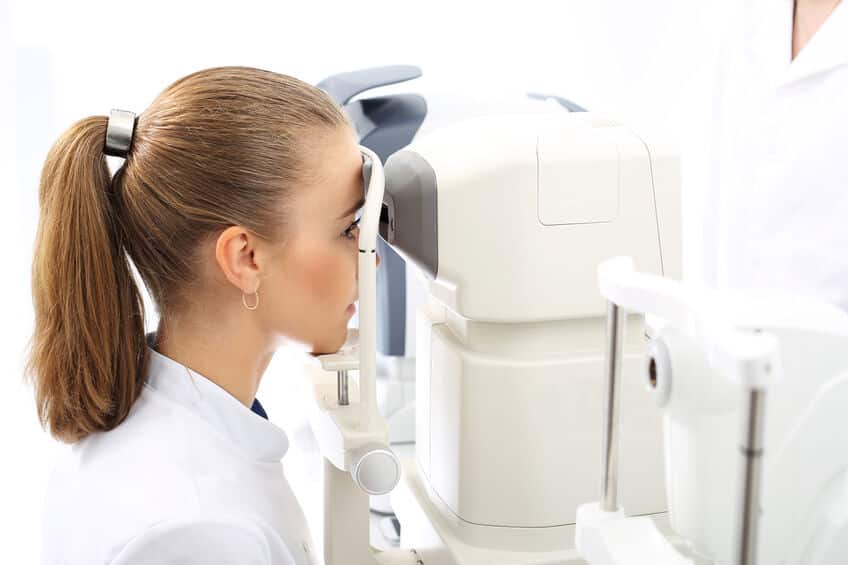
Your first eye exam can be exciting and slightly nerve-wracking, especially if you’re unsure what to expect. Many who have good vision believe they don’t need to schedule an eye exam, but this is false because a regular eye exam can help care for your overall eye health by detecting signs of severe eye conditions like diabetes, high blood pressure, glaucoma and more. Follow these tips to prepare for your first eye exam correctly:
 1. Bring the proper documentation
Be sure to bring proper documentation to your eye appointment to ensure the process runs smoothly. Since this list may seem lengthy to some, be sure to spend some time preparing ahead of time.
Pack items like your current glasses, sunglasses and contacts in a small backpack or bag for your exam. Be sure also to add a list of your current prescription medications stored either on your phone or on a clean piece of paper. Finally, you’ll want to bring your vision insurance information, the name and address of your primary care doctor and a list of questions you may have before your visit.
2. Schedule driving arrangements
In some cases, your eye exam will require you to have your pupils dilated. This is usually only common for individuals over 60 years old who need to be tested for diseases like glaucoma, cataracts and degenerative eye diseases. The eyes are dilated with eye drops that block parasympathetic receptors, allowing the pupil to enlarge so the doctor can easily examine the back of your eye.
If you end up having your eyes dilated, be sure to schedule a ride home from the doctor’s office and wear eye protection to ensure the glare from the sun doesn’t damage your eyes.
3. Prepare for visual tests
During your visit to the doctor’s office, you’ll be subject to both a visual acuity and visual field test. During the visual acuity test, the doctor will screen if you need glasses or contacts by asking you to identify letters printed on an alphabet chart or screen. During a visual field test, your doctor will test your peripheral vision by allowing you to press a button every time you register a blinking light in your peripheral vision.
Contact our friendly team at Utah Eye Centers to schedule your first eye exam today. Visit our website or give us a call 801-476-0494.

 If you’ve recently received a refractive error diagnosis and are ready to order contact lenses, there are a few factors to consider before going all in on your purchase. The right contact lens choice depends on your budget, diagnosis and cleaning habits among other factors.